
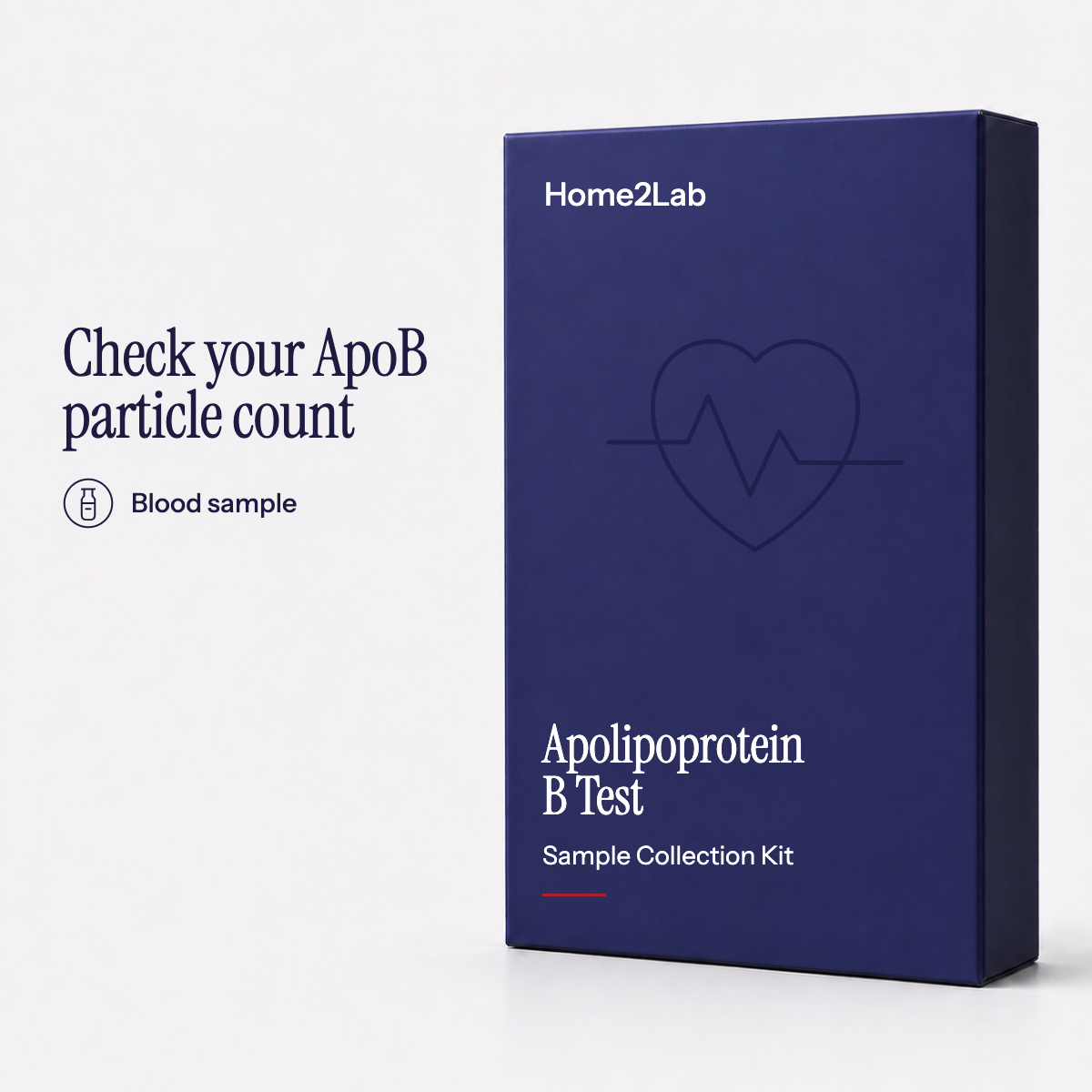
Order your kit
Your test arrives in discreet packaging with clear instructions.

Measures apolipoprotein B (ApoB), a marker of the number of potentially atherogenic lipoprotein particles circulating in your blood. It can add context to a standard cholesterol result as part of a wider cardiovascular-risk assessment.
Clinicians may use ApoB alongside cholesterol, triglycerides, blood pressure, diabetes status, smoking history, family history and other factors when assessing cardiovascular risk. It can be particularly informative when ApoB and LDL cholesterol do not appear to tell the same story.
ApoB is not a standalone diagnostic test for heart disease and it does not show whether an artery is narrowed or blocked. Your result requires the laboratory range and your wider clinical context.
This test may suit an adult who wants to measure ApoB as an additional cardiovascular-risk marker, including someone with raised cholesterol or triglycerides, diabetes, metabolic risk factors, a strong family history of cardiovascular disease, or an existing clinician-led lipid-management plan.
If you want ApoB together with total cholesterol, LDL cholesterol, HDL cholesterol, triglycerides and non-HDL cholesterol, choose the Advanced Heart Health Test instead. New chest pain, severe breathlessness or other urgent symptoms require immediate medical assessment rather than postal testing.
Read the supplied collection instructions before starting. Prepare all kit components, collect the blood sample exactly as directed and return it on the same day wherever possible. Avoid posting over weekends or bank holidays so the sample does not wait in the postal system.
Continue prescribed medicines unless a clinician has told you otherwise. If a clinician asked for this test, follow any preparation advice they gave you.
Your report gives a numerical ApoB value with the laboratory's reference information. A higher value can indicate a greater number of potentially atherogenic particles, but it does not confirm heart disease. A value inside the reference range does not remove cardiovascular risk from other factors.
Reference ranges and treatment targets are not interchangeable. A clinician may use a different target for someone with known cardiovascular disease, diabetes, kidney disease or another high-risk condition.
Review a concerning or unexpected result with your GP or another qualified clinician, especially if you have known cardiovascular disease, diabetes, kidney disease, a strong family history or take lipid-lowering medicine. They may interpret ApoB with a lipid profile and your overall cardiovascular risk.
Do not start, stop or change statins or other medicines from this result alone.
This result is a snapshot from one sample. It cannot calculate your complete cardiovascular risk, diagnose blocked arteries, rule out heart disease or explain symptoms on its own. Sample quality depends on following the collection and return instructions.
Call 999 for chest pain or pressure that does not go away, severe difficulty breathing, collapse, or other symptoms of a possible heart attack. Use NHS 111 when you need urgent advice and are unsure what to do. Do not wait for a home-test result if you feel seriously unwell.
Your secure report shows the measured values, reference ranges and a doctor’s comment where appropriate.