


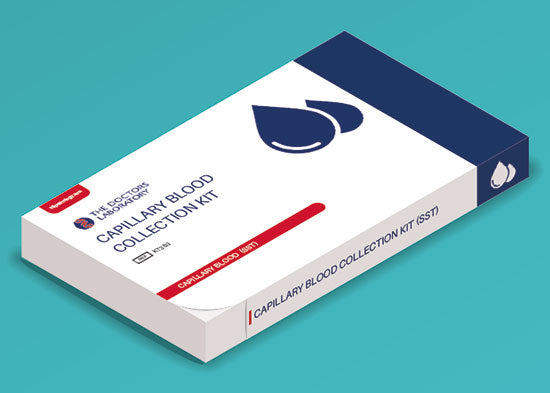
Order your kit
Your test arrives in discreet packaging with clear instructions.

Measures carbohydrate-deficient transferrin (CDT), an indirect marker that may rise after sustained heavy alcohol exposure. This standard home-collection test should not be assumed to meet DVLA, court, employer or other identity and chain-of-custody requirements; confirm the required collection process before ordering for an official purpose.
Clinicians use CDT as one objective marker when assessing a pattern of sustained heavy alcohol exposure. It is not a measure of current intoxication and cannot diagnose alcohol dependence without history and clinical assessment.
This may suit someone who specifically wants to check Carbohydrate-deficient transferrin (CDT), or repeat the marker(s) as part of an established monitoring plan. It is a focused test and may not include related markers needed to explain an abnormal result. The test should not delay assessment of persistent or worsening symptoms.
Return the sample on the same day it is collected. Do not post over weekends or bank holidays.
The laboratory will report Carbohydrate-deficient transferrin (CDT) with an assay-specific reference range, threshold or qualitative interpretation. Read the biomarker explanation above for common reasons a result may be high, low, detected or reactive, then use the laboratory comment and clinical context to decide whether repeat or follow-up testing is needed.
Review Carbohydrate-deficient transferrin (CDT) against the reference range and laboratory comment, then consider whether the pattern fits your symptoms, medicines and reason for testing. Share a concerning or unexpected result with a clinician before changing treatment, supplements or diet.
The result is a snapshot from one sample. It cannot diagnose a condition on its own; values inside or outside a reference range require clinical context.
Do not wait for a home-test result if you feel seriously unwell. Call 999 for a life-threatening emergency, or use NHS 111 when you need urgent advice and are unsure what to do.